

A lot of workplace flexibility can be created without building a single wall.
That idea became particularly apparent when we photographed the transformation of the Skelton Group Investments Limited workplace, expertly delivered by Vibe Business Interiors.

It also presented us with an interesting photography challenge:
How do you photograph something that has deliberately been designed to change?
In traditional office design, architecture often provides very clear visual boundaries.
Walls separate meeting rooms from workspaces.
Doors indicate transitions.
Corridors establish circulation routes.
But increasingly, flexible office design is challenging those conventions.
Instead of permanently defining how every square metre should be used, designers are creating workplaces that can respond to different people, activities and moments throughout the working day.
And that requires a different approach to photographing them.


Creating flexibility without permanent walls
One of the most interesting aspects of the Skelton Group Investments workplace is how different zones have been established without relying entirely on traditional architectural divisions.
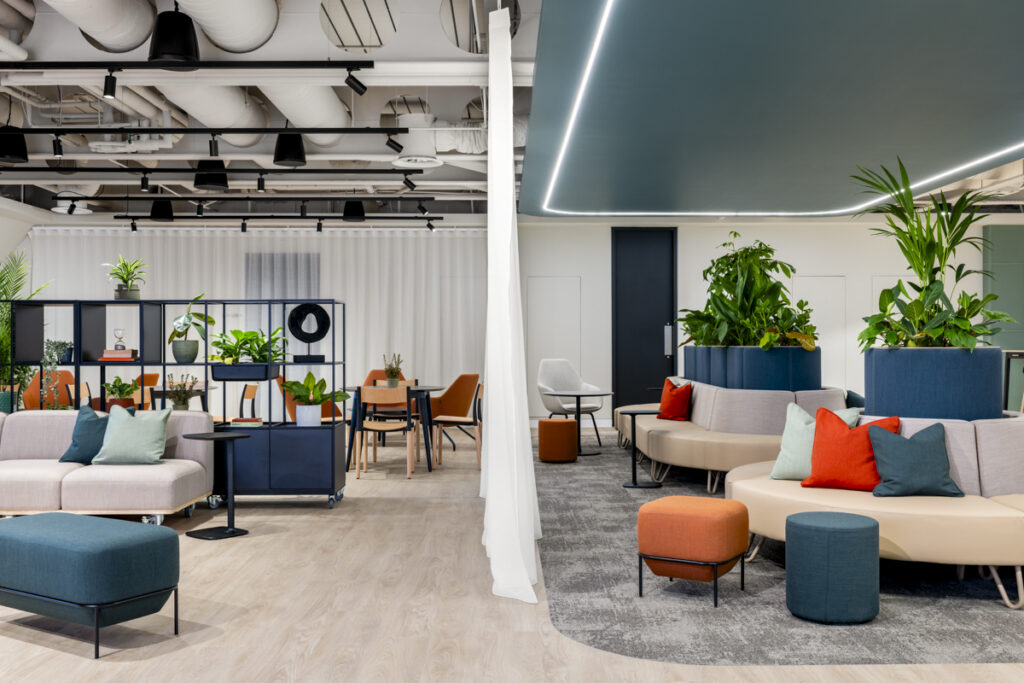
Acoustic curtains create temporary boundaries.
Furniture helps define different activities.
Open areas can support individual work at one moment and collaboration at another.
Rather than the architecture permanently dictating how people should use the workplace, elements within the space allow those boundaries to become softer and more adaptable.
The photography has to work harder
From a photography perspective, flexible spaces create a different challenge.
A conventional approach could be to photograph each furniture setting individually:
A meeting area.
A breakout space.
A desk setting.
A collaboration zone.
Each photograph might work perfectly well on its own. But relationship between them would be missing.
If flexibility is one of the fundamental ideas behind the design, our photography needs to communicate that flexibility rather than inadvertently making every area appear isolated and permanent.
Photographing relationships, not just individual spaces
Therefore, for this project we looked beyond individual furniture settings.
We wanted to show where one zone transitions into another.
How furniture helps organise the floorplate.
How acoustic curtains can create privacy without introducing permanent architectural barriers.
How sightlines connect different activities.
Rather than filling the frame with one beautiful furniture arrangement, we decided that the stronger photograph will be the one that shows several environments simultaneously.
We wanted to show not only what the workplace looks like, but how it works.
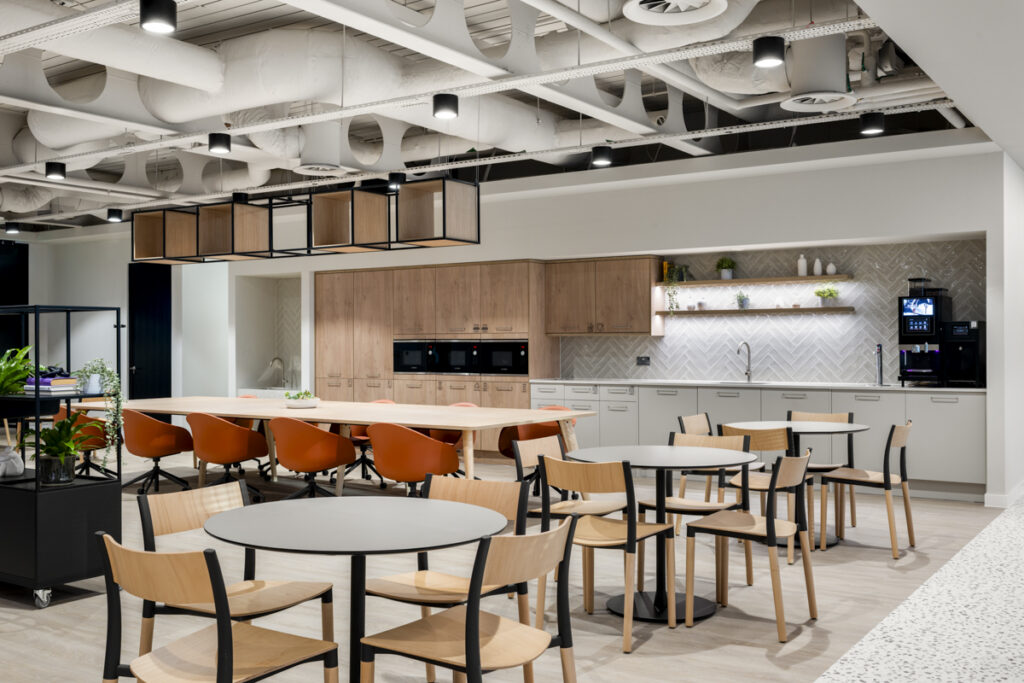


Photography showing the thinking behind the design
This is ultimately what we believe good workplace photography should achieve.
A completed project isn’t simply a collection of attractive rooms.
The design process is all about decisions about how people move, meet, concentrate, collaborate and interact with their environment. And some of those decisions are immediately obvious, while others are remarkably subtle. Our job is to identify them and translate them into images.
Share Post: