

In architectural photography, taking the photograph is often the quickest part of the process.
Not because taking the photograph takes two days. The shutter may only be open for a fraction of a second. What takes time is waiting for the building, the light and the surrounding environment to come together in exactly the right way.
That was very much the case at 6 St Andrew Square in Edinburgh, where Office Curator recently photographed a major lobby refurbishment for KanAm Grund Group, delivered in collaboration with Buckley Gray Yeoman and the wider project team.
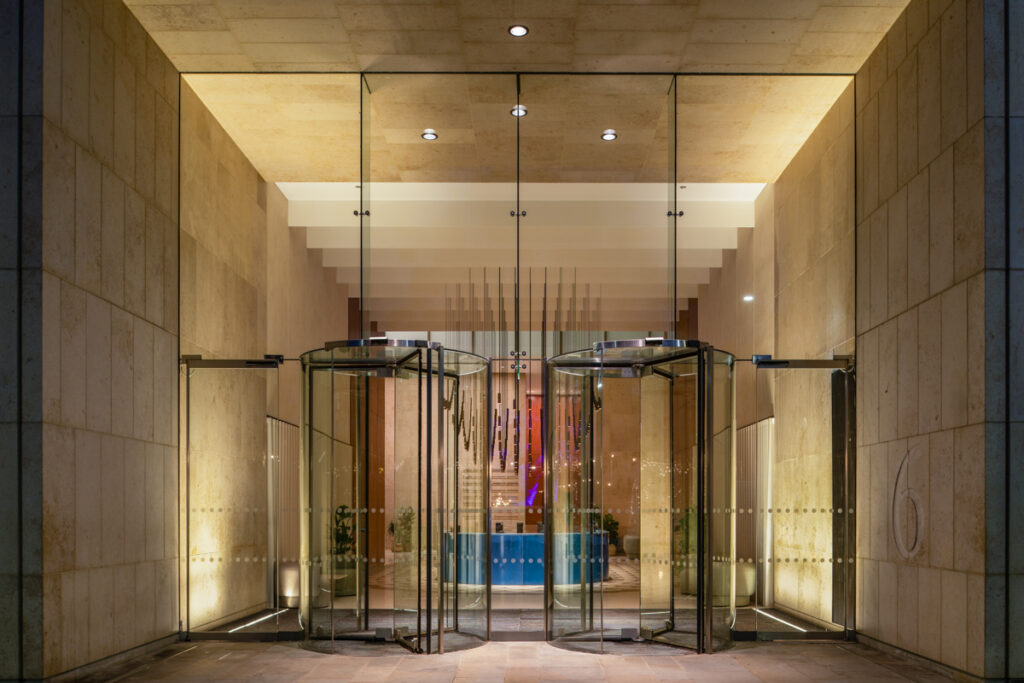
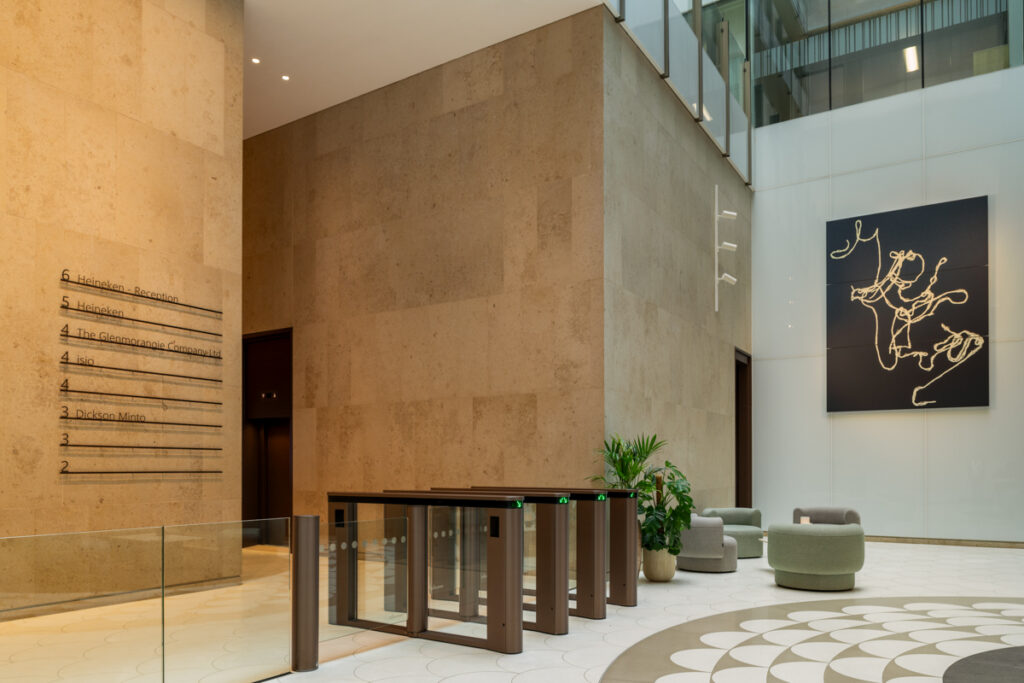
From the outset, we knew this wasn’t a project we wanted to approach simply as a record of a completed refurbishment. The transformation of the lobby had changed not only the interior but also the way the building presented itself externally. The photography therefore needed to communicate both: the quality and detailing of the architecture inside and the renewed presence of the asset within St Andrew Square.
And to achieve that, we needed to plan accordingly. The changing lighting conditions and the fact the lobby is part of a busy office space, required a slightly extended schedule for shooting.
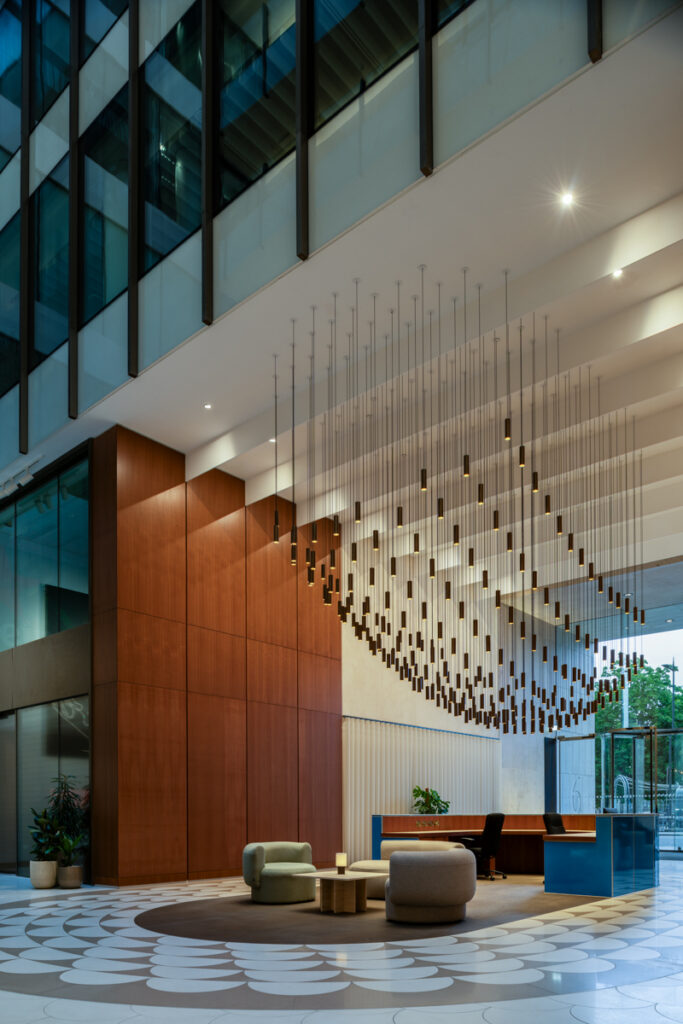


Sometimes architectural photography is about patience
Buildings are not static photographic subjects in quite the way they might initially appear.
Their character changes throughout the day.
Natural light moves across surfaces. Materials become warmer or cooler. Shadows reveal depth and structure. Reflections appear and disappear across glazing. Artificial lighting gradually becomes more prominent as daylight fades.
A viewpoint that doesn’t quite work at midday may become the strongest photograph of the entire shoot at six o’clock in the evening.
At 6 St Andrew Square, we spent time observing exactly these changes.
During daylight hours, natural light revealed the materials, proportions and architectural detailing of the refurbished lobby. Certain compositions worked particularly well because the daylight allowed us to show the relationship between different finishes and architectural elements clearly.
But the glazing presented another opportunity.
As the exterior light changed, so did the reflections. The visual relationship between the lobby and the street continually shifted. Rather than trying to force those photographs into the conditions we happened to have at a particular moment, we planned around them. We watched. We waited. And where necessary, we came back.

We planned the photography around the building
What could have been approached as a few hours of project documentation became a two day architectural shoot.
Not because we needed two full days to physically photograph the lobby, but because the strongest images existed at different moments.
This is an important distinction.
There is always a temptation to make photography fit neatly into a predefined window. Arrive at a certain time, work through a shot list and leave several hours later.
Sometimes that works perfectly.
Sometimes the architecture asks for something different.
At 6 St Andrew Square, we deliberately planned the photography around the building rather than expecting the building to work around our schedule. That way we photographed when natural light was working in our favour.
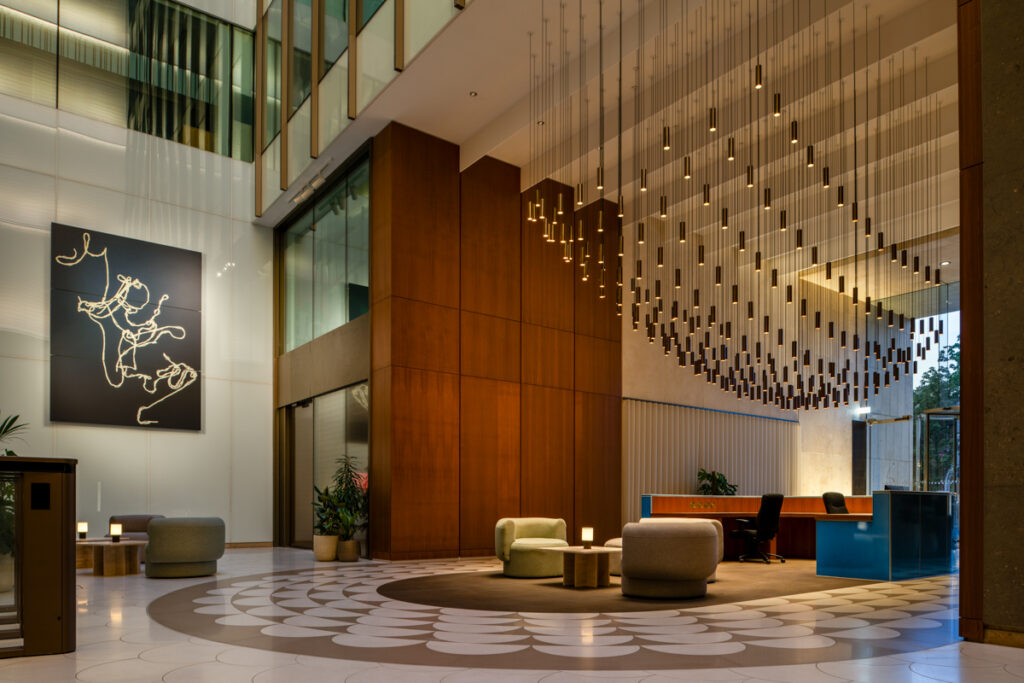
There is a difference between photographing a building and representing it
This is something we think about frequently at Office Curator.
There is a difference between documenting what has been completed and creating the photographs that will represent that work.
A completed project may exist for decades, but many of the people who encounter it professionally will never actually visit it.
They will experience it through photographs.
Those photographs may sit on an architect’s website. They may become part of an asset manager’s marketing material. They may appear in an award submission, press article, investment presentation, case study or LinkedIn post.
Years after completion, those images may still be used to demonstrate the thinking, craftsmanship and expertise behind the project.
The project gave us the opportunity to photograph architecture under very different conditions and create a collection that communicates both the quality of the refurbished interior and the building’s presence within its Edinburgh setting.
A big congratulations to Nicolas Vollmer and KanAm Grund Group, Victoria Cooper-Kempski and the team at Buckley Gray Yeoman for the outstanding design, Iain McLean and Brendan Magee at Workman LLP for the excellent project management, and Advanced Building Contractors Ltd for the quality of execution on site, alongside Blyth & Blyth Consulting Engineers Ltd, Atelier Ten and Shoreditch Arts Club.
For us, the project reinforced something that applies whether we are working in Edinburgh, London or further afield.
The perfect architectural photograph isn’t necessarily created by having more equipment, making the composition more dramatic or taking hundreds more photographs.
Sometimes it comes from understanding the architecture well enough to know that the photograph isn’t there yet.
And knowing when to come back.
For clients searching for experienced architectural photographers in London and across the UK, this is an important part of our approach at Office Curator: we don’t simply photograph the space in front of us. We consider how the architecture, light and surrounding environment work together, and create imagery designed to represent the project at its very best.
Share Post: